Monday, 6 March 2017

Carnival masks Αποκριάτικες μάσκες

Apokries -Αποκριές

Making masks for the Carnival.


In my class the previous week we did the following activity.
It is a mask to wear it for the Carnival fair.


What you will need:
One paper white plate, elastic ribbon, markers, scissors, 
self-adhesive gems/diamonds, feathers, tissue paper, 
stapler or clear gift wrap tape.

We used a white paper plate
and we cut it in half with a scissor.
Then I put it over the child face 
and I draw the eyes holes. 
I cut the holes for the eyes.
After this, they made one hole in each corner for the ribbon. They measured the ribbon with their head 
and they made a knot at the masks’ holes.
Lastly every child drew their mask and added their gems, feathers and tissue paper.


The result was excited pupils
and lots of laughs when they wore their own mask.


Of course, after this crafting activity,
carnival music and «γαϊτανάκι»
was essential for creating the «Αποκριές» feeling!


Sunday, 29 January 2017

The Greek Letters Day

Τα Ελληνικά γράμματα
30th January “The Greek letters” day.


An activity for the Greek Letters Day 
and the three Hierarchs
(Οι Τρεις Ιεράρχες).


In my class this week we did the following activity.

It is a church shape card.

I used this picture with the 3 Hierarchs from this link


and I gave to pupils to colour it.


Then I did this template with the cross on top 
to look like a church.


From one side, in the middle, we glued the picture.
Over the picture pupils wrote 

Οι 3 Ιεράρχες” and “30 Ιανουαρίου”.


To the left and to the right, pupils choose sentences to copy from the whiteboard that these wise saints had said.
Most of them chose

“ Η ειρήνη είναι το πιο γλυκό πράγμα στον κόσμο”

and

“Η καλή φιλία είναι θησαυρός”

They folded and in the front of the card, where the two are join, they did one coloured cross.


To the back, they wrote their name.


The Three Hierarchs (Οι Τρεις Ιεράρχες) refers to Basil the Great (Μέγας Βασίλειος), Gregory the Theologian (Γρηγόριος ο Θεολόγος) and John Chrysostom ( Ιωάννης ο Χρυσόστομος).


Wednesday, 25 January 2017

How can you help your pupils spell their name correct?

Do your pupils spell
 their name
 correct in Greek?


Using this technique to my classes
always helped all my pupils
to spell their name correct!


use this money box instead of  your register to help your students to learn spelling their name.

I remembered when I had my first lesson in a year 3 class 
and I was in shock when I realised that they were pupils in my class that they didn't spell their name correct. 
But... this was my 1st year. 
After I realised that this phenomenon is so common.

 From that moment, I understood how important it was to find a way - activity to be sure that all my pupils can spell their name.

What I did, it was to find a metallic money box that tucked away in a cupboard and use it as my register every day. 
Any box can do the job, just let a hole on top.

I put this box with some small papers and a pencil 
next to my class door
 and when a pupil get inside
 he must write down his/her name
 and put it inside the hole of the money box.


In this way, they practise writing their name 
every day 
in an exciting way. 

The results? 

After 5-7 times, all the children spelled correctly their name!

Tuesday, 24 January 2017

Learn colours in Greek easy!

Learn the colours 
in Greek easy!

 colours in Greek matching activity

matching activity

What do you need: plain wooden clothes pegs, one plain white paper plate, and markers in different colours (basically the colours you want to teach).

Take the plate and 
write down the names of the colours 
you want to teach.
my plate after I wrote the colours I want to teach

Then paint the pegs with the written colours.

my pegs after colouring

The colours that I chose to teach were:
Κόκκινο=red
Κίτρινο= yellow
Μπλε= blue
Άσπρο= white
Μαύρο= black
Πράσινο= green
Καφέ= brown
Ροζ= pink
Γαλάζιο=light blue
Γκρίζο= grey
Μωβ= purple
Πορτοκαλί= orange

Then you just ask the pupils 
to match the coloured pegs 
with the written words on the plate.

The result was my pupils loved this activity 
and most important they learned the colours so quickly.

Sunday, 15 January 2017

New Year's Resolutions?

New Year’s Resolutions?
Have you made some New Year's Resolutions in your class???  
Here is an activity you can do after Christmas holidays.

 Ask your pupils to complete each of these sentences by writing their own phrase in the gaps, 
thinking about all these things
 they would like to change in 2017.
Download the resolutions sheet here.

Look what some of my pupils wrote:


Or instead ask pupils to choose one word to sum up 

how they would like to feel mostly in 2017

 and to create a poster.

These two activities are simple and 

so can be used in a variety of classrooms

 with a variety of ages and abilities!


 In the meantime, while I was looking around 

for inspirational stuff, I found these 

New Year's resolutions for teachers 

posted by the Pensive Sloth,

Wish I could claim these as mine, 

but they are not…

 here are some of my favourites…


 And my most favourite…may be because it is snowing in Greece and not here in London...


What can I say? No comments...


Thanks to my friend Maria who sent me this picture.👍

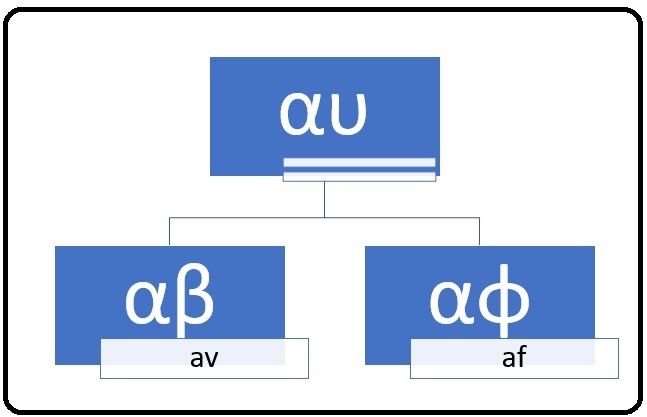
The Greek double letter "αυ" and its voice.

The Greek 
double letter «αυ».

Always there is a difficulty for pupils learning
Greek as a F.L.
 with the phonic of this double letter.
And the reason of this?
This double letter has two voices!!


But if you are wondering, 
just like my pupils in class this week,
 “how do we know when we will say af or av?”

There is an answer obviously on this question.
Ancient Greeks created everything using Maths rules.

The rule of this letter is the following:

When you will have one of these
7 letters

σ, ξ, κ, π, τ, θ, χ


after the double letter «αυ»
then
«αυ» says «αφ»(af).

So, from now on there is no fear about this letter.
Give your students lots of words
and you will see that
they will manage very easily
to pronounce everything correctly.

Additionally, I am giving the following activities.

Exercise 1: circle the words with the voice αφ (af)
download here

Exercise 2: put the words in the correct column
download here.

Exercise 3 : Words to achieve confidence 
in reading words with the letter "αυ".


Try to check how many words you can read in one minute!


Friday, 13 January 2017

upper and lower-case matching

Upper and lower-case letters

matching game.


Materials: Two plain white paper plates, permanent marker 
and the letter pegs we did here.


Just write on the edges of the plate the Greek letters in order. I did two plates, 
one with the upper 
and one with the lower-case letters.


The pupils need to have, in front of them, the box with the capital letter pegs and the lower-case plate.


After they will finish this correctly, let them continue with the box with the lower-case pegs and the upper-case plate.


When they will achieve to finish this activity correctly 
then it’s time for the

Timer-time!

I use a timer because the pupils love
to beat the quickest one or even me!!!

Always keep a record of their time and
always they feel so proud when they achieve better time!


Let the game begins…