Sunday, 15 January 2017

New Year's Resolutions?

New Year’s Resolutions?
Have you made some New Year's Resolutions in your class???  
Here is an activity you can do after Christmas holidays.

 Ask your pupils to complete each of these sentences by writing their own phrase in the gaps, 
thinking about all these things
 they would like to change in 2017.
Download the resolutions sheet here.

Look what some of my pupils wrote:


Or instead ask pupils to choose one word to sum up 

how they would like to feel mostly in 2017

 and to create a poster.

These two activities are simple and 

so can be used in a variety of classrooms

 with a variety of ages and abilities!


 In the meantime, while I was looking around 

for inspirational stuff, I found these 

New Year's resolutions for teachers 

posted by the Pensive Sloth,

Wish I could claim these as mine, 

but they are not…

 here are some of my favourites…


 And my most favourite…may be because it is snowing in Greece and not here in London...


What can I say? No comments...


Thanks to my friend Maria who sent me this picture.👍

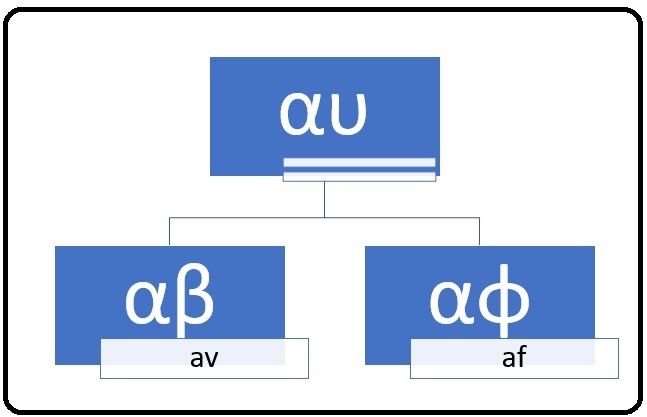
The Greek double letter "αυ" and its voice.

The Greek 
double letter «αυ».

Always there is a difficulty for pupils learning
Greek as a F.L.
 with the phonic of this double letter.
And the reason of this?
This double letter has two voices!!


But if you are wondering, 
just like my pupils in class this week,
 “how do we know when we will say af or av?”

There is an answer obviously on this question.
Ancient Greeks created everything using Maths rules.

The rule of this letter is the following:

When you will have one of these
7 letters

σ, ξ, κ, π, τ, θ, χ


after the double letter «αυ»
then
«αυ» says «αφ»(af).

So, from now on there is no fear about this letter.
Give your students lots of words
and you will see that
they will manage very easily
to pronounce everything correctly.

Additionally, I am giving the following activities.

Exercise 1: circle the words with the voice αφ (af)
download here

Exercise 2: put the words in the correct column
download here.

Exercise 3 : Words to achieve confidence 
in reading words with the letter "αυ".


Try to check how many words you can read in one minute!


Friday, 13 January 2017

upper and lower-case matching

Upper and lower-case letters

matching game.


Materials: Two plain white paper plates, permanent marker 
and the letter pegs we did here.


Just write on the edges of the plate the Greek letters in order. I did two plates, 
one with the upper 
and one with the lower-case letters.


The pupils need to have, in front of them, the box with the capital letter pegs and the lower-case plate.


After they will finish this correctly, let them continue with the box with the lower-case pegs and the upper-case plate.


When they will achieve to finish this activity correctly 
then it’s time for the

Timer-time!

I use a timer because the pupils love
to beat the quickest one or even me!!!

Always keep a record of their time and
always they feel so proud when they achieve better time!


Let the game begins…

Thursday, 12 January 2017

Greek letters Alphabetical ordering activity.


Greek letters
Alphabetical ordering activity.

On a Hanger!!


Practice with this exercise 
using the letter pegs 
we did in the previous post here
and place the pegs in alphabetical order.

Not only would it strengthens pupils knowledge
of Greek Alphabet order
but it will simultaneously work 
on their fine motor skills. 

Give them the box with the capital letter pegs 
or with the lower case pegs 
and ask them to place the pegs 
on a hanger in alphabetical order. 


Greek Alphabet


Greek alphabet letters. 


Simple to make these letters 
from clothes pegs 
and 
very useful tool to different activities!

What do you need: plain wooden clothes pegs, 
a permanent marker.


I painted the wooden pegs using two colours blue for the consonants and red for the vowels.


vowels with red


consonants with blue

 Let them dry.


I had an English stamp set tucked away in my craft cupboard which I used it for the same capital Greek letters.


The rest I wrote the letters directly onto the pegs with a permanent mark. 

All you need to end up with is two sets of pegs. 
One with the upper case and 
one with the lower case Greek alphabet letters 
to use them to a lot of different activities.


Vana Sarimpalidou
email: teachingmoderngreek@gmail.com


Welcome!


Καλώς ορίσατε!

Hi I am Vana. A modern Greek teacher in London. I have been teaching for over 15 years. Teaching is my absolute favourite!!!

When I am not in a classroom you can find me, with my beautiful daughter Elizabeth and my wonderful husband, out enjoying the sunshine or the rain! I love reading, travelling, visiting museums.

I start this blog because I believe there is a gap of activities specialised to students who are learning Greek as a foreign or second language. And with this blog, I would like to share my ideas and experiences and inspire you with your students!

I hope you enjoy browsing around my blog and I love hearing from fellow teachers about creative things we are doing at your class.

So feel free to leave a comment!

Best wishes.

Vana